
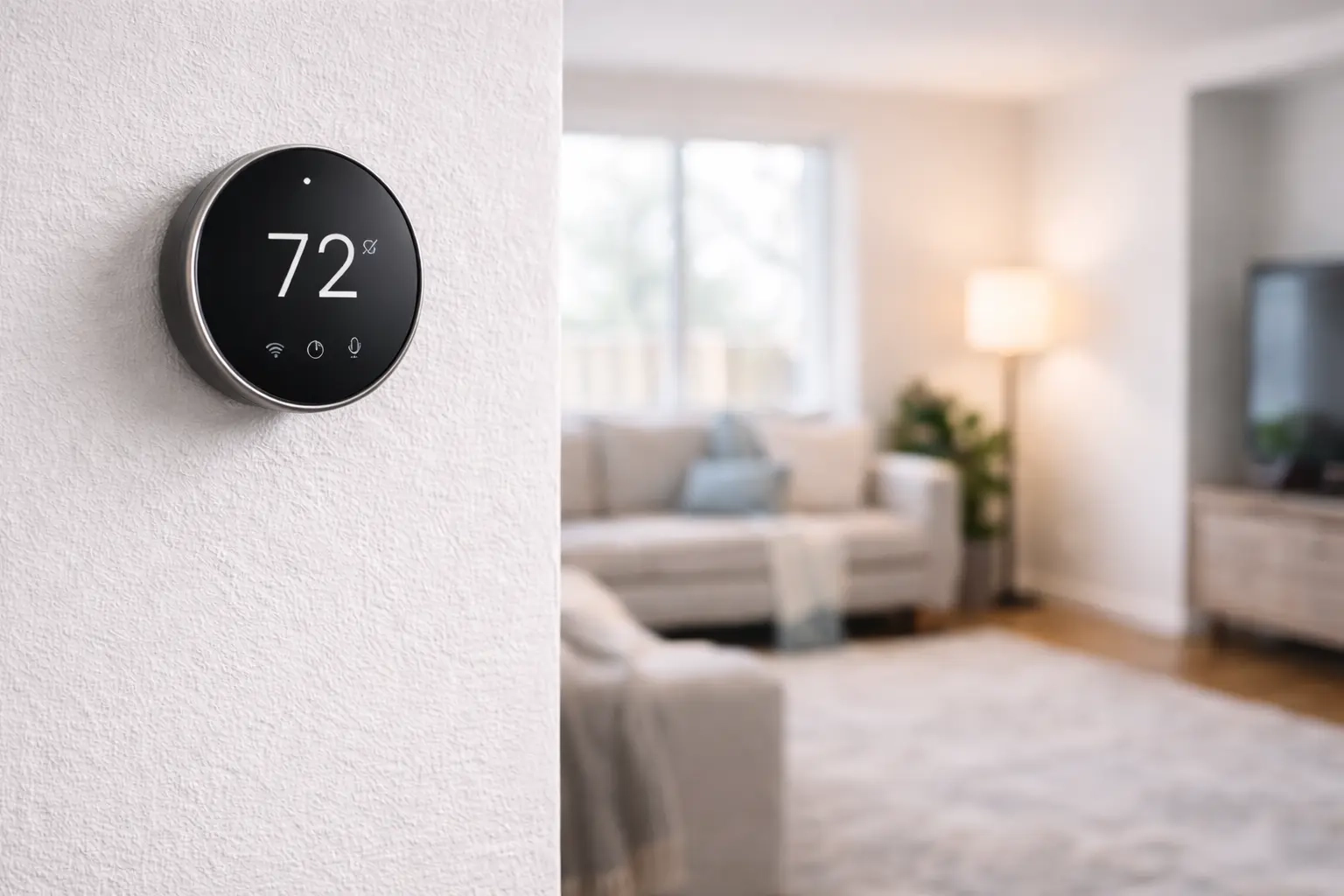
8 Best Smart Thermostats 2025 to Buy on Amazon in 2025
Best Smart Thermostats. If you’re upgrading your home in 2025, a smart thermostat is one of the simplest ways to improve comfort and reduce energy waste at the same time. Today’s best models use smarter schedules, geofencing, room sensors, and clean apps to keep temperatures steady without you constantly adjusting settings. Below, we hand-picked eight Amazon-available thermostats across different price ranges and HVAC setups — each with clear benefits, practical notes, and a quick “who it’s best for.” Check out more smart home gadgets.
1) Best Smart Thermostats 2025 – ecobee Smart Thermostat Premium
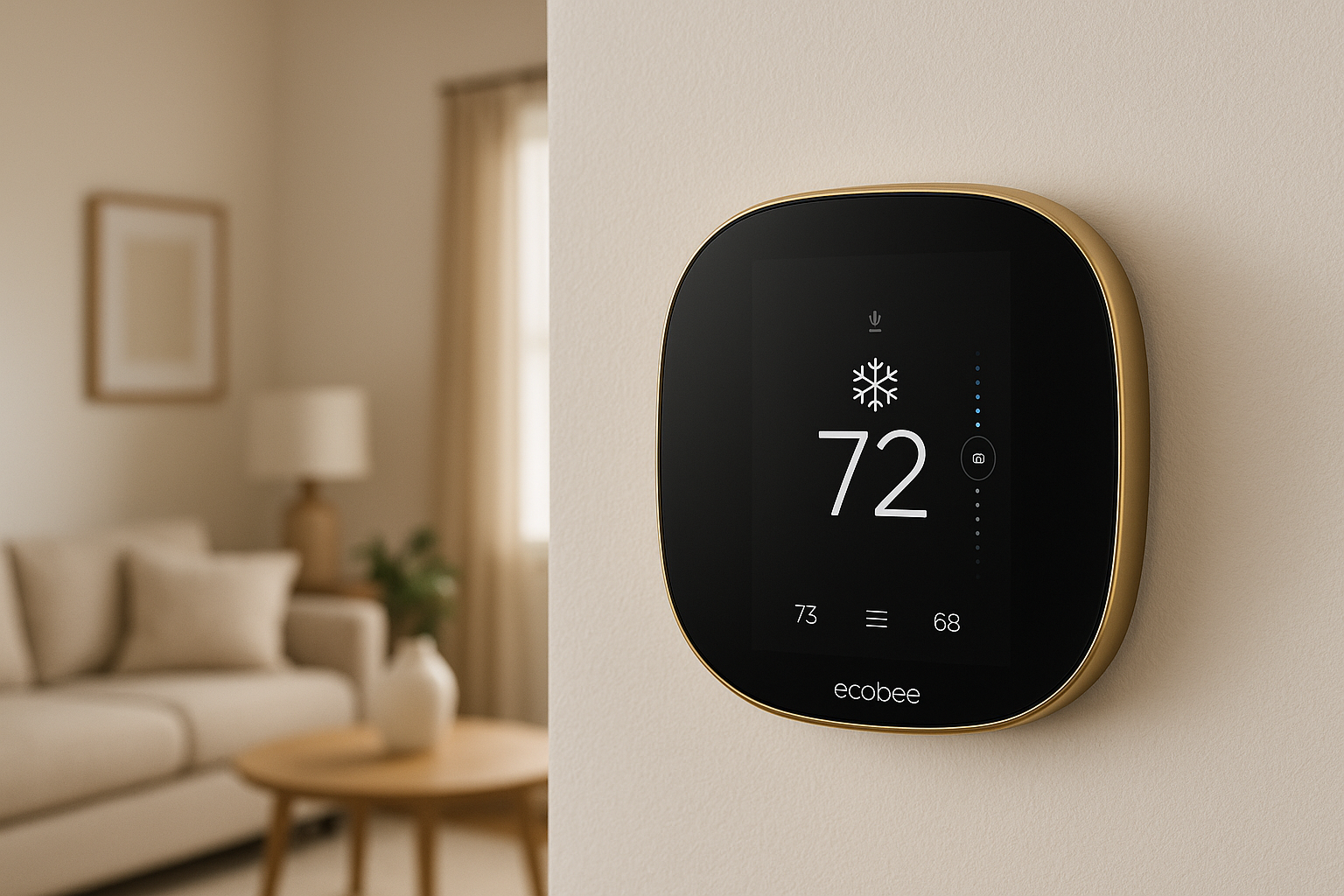
The ecobee Smart Thermostat Premium is the “do-it-all” pick if you want comfort you can actually feel — not just fancy graphs. It combines a responsive touchscreen, a polished app, and a bundled SmartSensor that helps balance hot/cold spots by prioritizing the rooms you use most. It also fits smoothly into major smart home platforms, so routines like “Away,” “Sleep,” or “Movie Night” can automatically adjust your HVAC without you thinking about it.
⚡ Intelligent comfort control
The included SmartSensor tracks both occupancy and temperature, helping the system spend energy where it matters. That means fewer surprise temperature swings between rooms and less overworking your HVAC.
🔒 Reliability & protection
ecobee’s updates and maintenance prompts keep things stable long-term. The air quality monitor adds an extra layer of usefulness by flagging when indoor conditions suggest it’s time to ventilate.
🌱 Savings & sustainability
ENERGY STAR® certified with eco+ features that automate small, smart adjustments (like sleep setbacks and preheating/precooling). Those tiny changes add up across weeks of real-life use.
- Works with Alexa, Siri, Google Assistant, SmartThings
- SmartSensor in the box for room prioritization
- Air quality monitoring + filter reminders
⚙️ Tech Specs
- Power: 24V hardwired (C-wire)
- Connectivity: Wi-Fi, Bluetooth
- App: ecobee (iOS/Android)
- Voice: Alexa, Siri, Google Assistant
2) Best Smart Thermostats 2025 – Google Nest Learning Thermostat (3rd Gen)
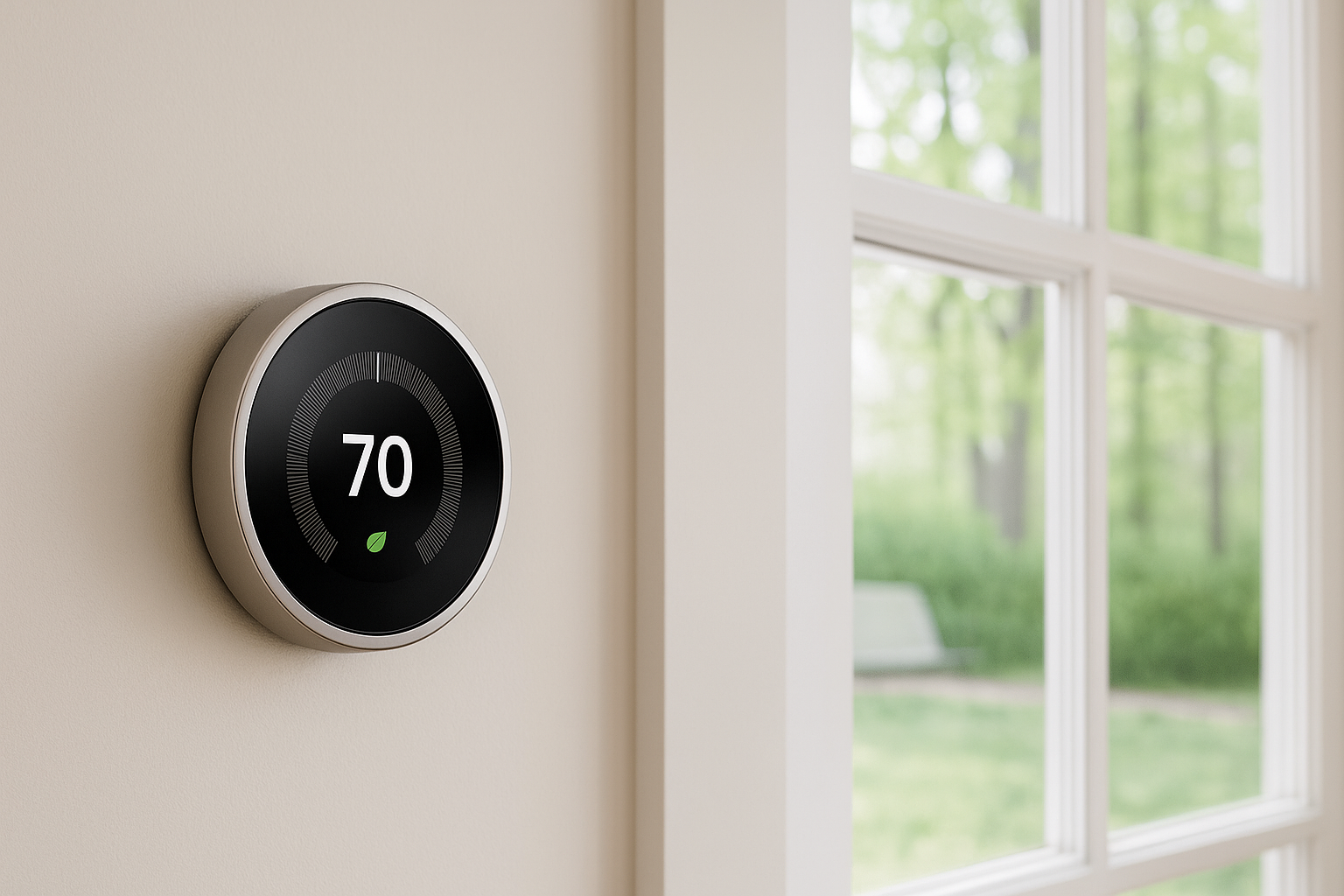
The Nest Learning Thermostat (3rd Gen) is still the best choice if you want “autopilot” comfort with minimal effort. It learns your habits over about a week, then builds a schedule that reduces waste without making your home feel like a refrigerator or a sauna. The Google Home app makes quick adjustments easy, and voice control through Google Assistant or Alexa is ideal when your hands are full.
⚡ Learns your schedule
It adapts to your routines and tightens schedules over time. Instead of you constantly tweaking, Nest quietly figures out what’s normal in your home and uses that pattern efficiently.
🔒 Mature ecosystem
Broad HVAC compatibility plus years of real-world use make this a low-risk, high-confidence pick for most households.
🌱 Efficient by design
Eco Temperatures and Home/Away behaviors help avoid conditioning an empty home — especially helpful if your daily routine isn’t perfectly predictable.
- Premium dial design in multiple finishes
- Energy history & quick scheduling
- Works with Google Assistant and Alexa
⚙️ Tech Specs
- Power: Rechargeable; C-wire recommended for some systems
- Connectivity: Wi-Fi
- App: Google Home/Nest
- Voice: Google Assistant, Alexa
3) Best Smart Thermostats 2025 – Google Nest Thermostat (2020)
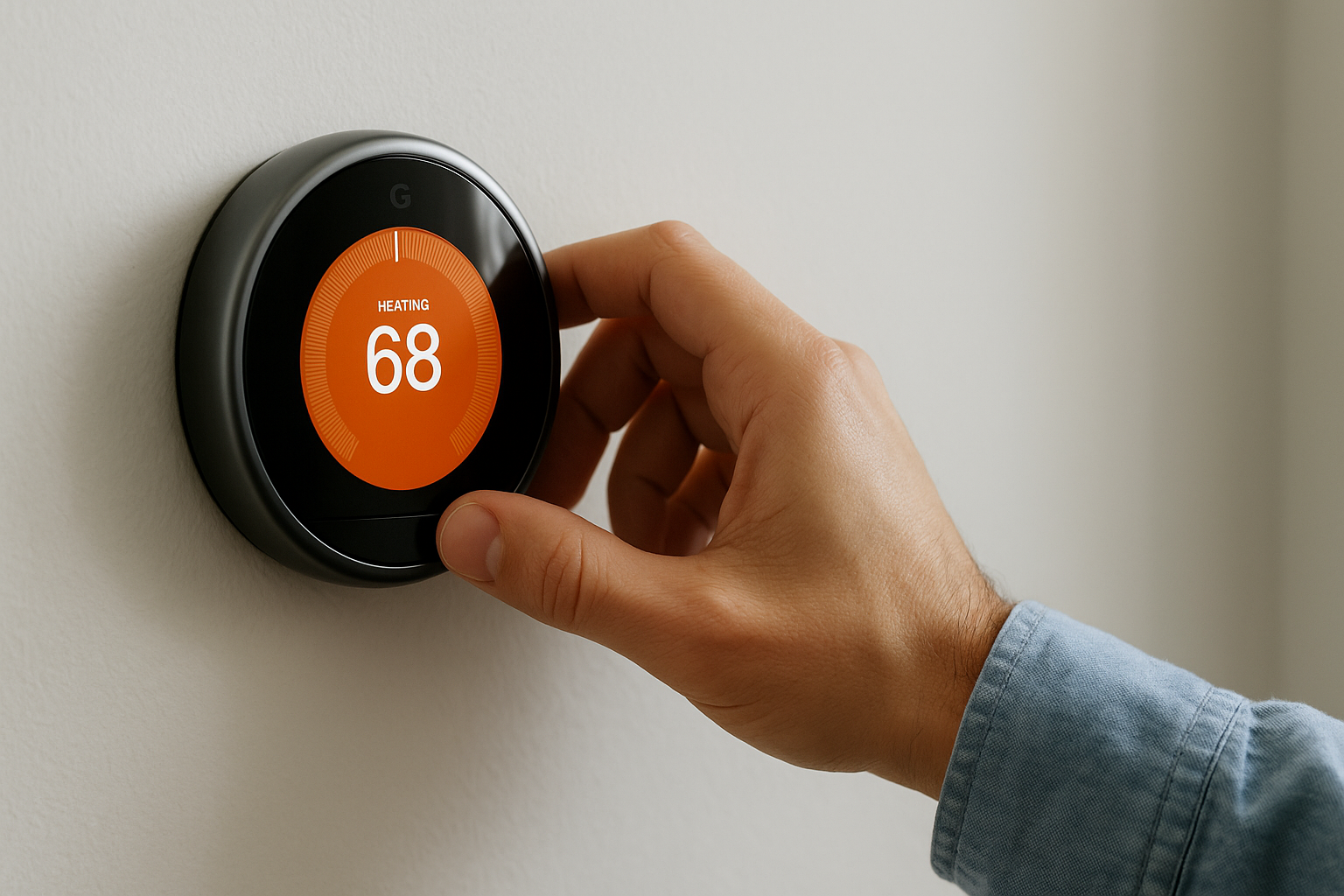
If you want the Nest look and Google Home simplicity at a more comfortable price, the Nest Thermostat (2020) is a strong buy. It focuses on app-based scheduling, presence detection, and easy “eco” settings rather than full learning automation. For many homes, that’s perfect: you get the essentials that save money without paying for features you’ll never touch.
⚡ Easy scheduling & remote control
Schedules are straightforward inside the Google Home app, and geofencing can reduce heating/cooling when everyone leaves — a simple feature that makes a real difference over time.
🔒 Solid compatibility
Works with most 24V systems, and many installs don’t require a C-wire (though having one can improve long-term stability on some setups).
🌱 Everyday efficiency
Eco Temperatures and energy insights help you stay consistent without micromanaging settings day after day.
- Minimalist design in several colors
- Google Home app control (iOS/Android)
- Voice control with Google Assistant or Alexa
⚙️ Tech Specs
- Power: Battery assisted; C-wire optional depending on system
- Connectivity: Wi-Fi
- App: Google Home
- Size: 3.31″ diameter, 1.07″ depth (approx.)
4) Best Smart Thermostats 2025 – Honeywell Home T9 Smart Thermostat
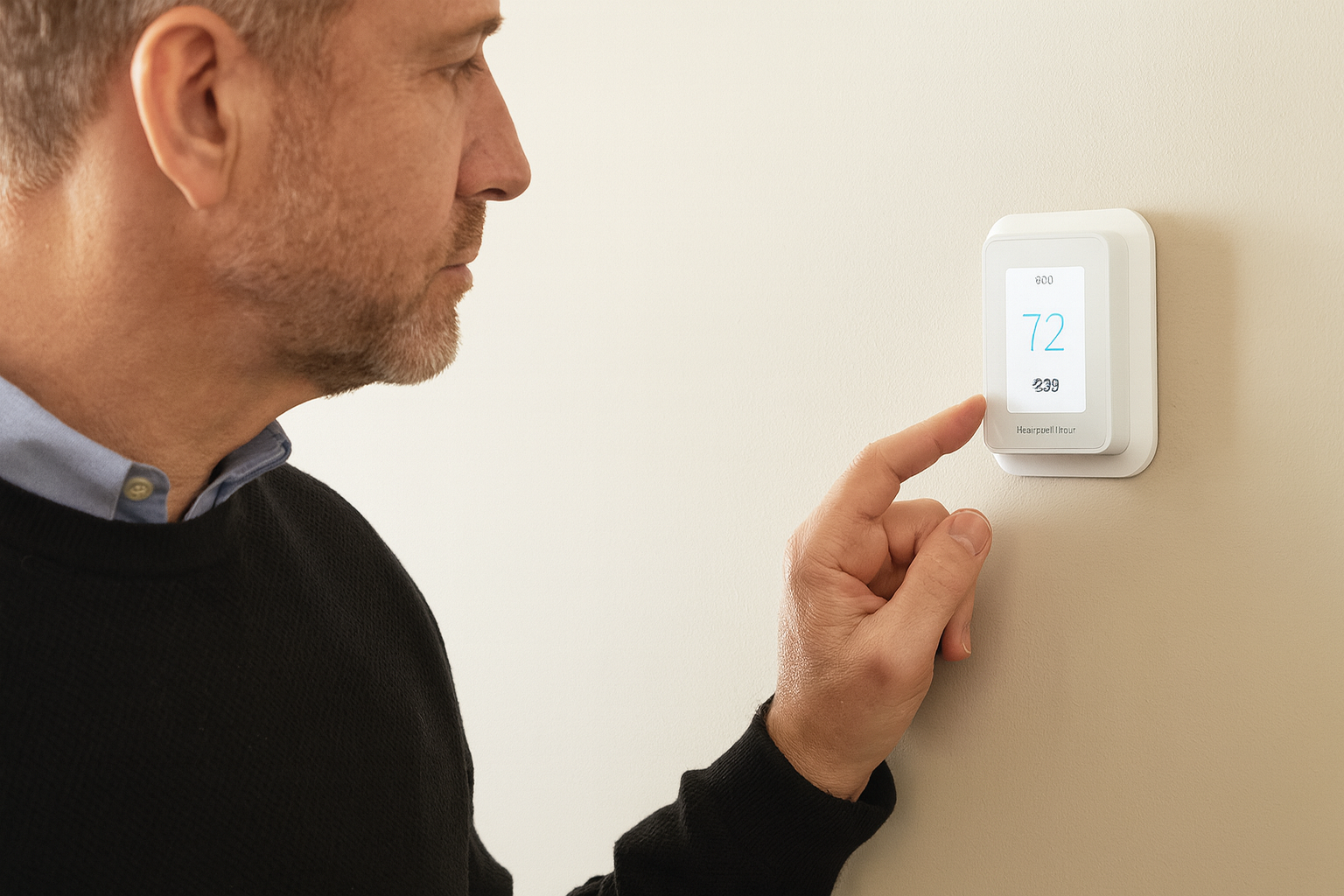
Honeywell Home T9 is a smart pick for homes where temperatures vary room to room — upstairs vs. downstairs, sunny rooms vs. shaded rooms, bedrooms vs. a warm home office. With room sensors (bundled in some kits or added later), you can prioritize where comfort matters at different times of day. The Resideo app is easy to navigate, and alerts help you catch temperature extremes before they become a problem.
⚡ Zone-style comfort without ducts
Room prioritization acts like “soft zoning,” helping older homes and multi-story layouts feel more consistent without expensive HVAC changes.
🔒 Proven lineage
Honeywell’s HVAC experience shows in clear documentation and stable behavior. Just remember: this model is for low-voltage systems, not high-voltage electric baseboards.
🌱 ENERGY STAR® savings
Geofencing and schedule tools reduce wasted runtime when the home is empty — especially useful for families with changing routines.
- Works with Alexa, Google, Apple Home
- Sensors expand coverage over time
- Clear, modern touchscreen UI
⚙️ Tech Specs
- Power: 24V hardwired (C-wire)
- Connectivity: Wi-Fi
- App: Resideo (iOS/Android)
- Compatibility: Most low-voltage systems; not for 120–240V baseboards
5) Best Smart Thermostats 2025 – Emerson Sensi Touch Wi-Fi (ST75/ST75W)
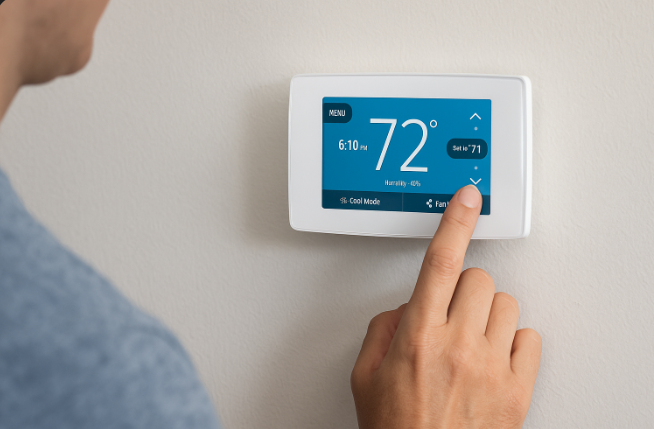
The Emerson Sensi Touch is a great “no-drama” thermostat if you want a big, readable screen and an app that feels simple instead of confusing. Setup is one of the strongest parts: the guided installation walks beginners through wiring clearly, which is a huge deal if you’ve never installed a thermostat before. Once it’s running, features like geofencing, schedules, and alerts help keep comfort steady without constant changes.
⚡ Fast DIY setup
Step-by-step app instructions reduce guesswork, and the process is friendly for homeowners who want to install without calling a pro (especially with a proper C-wire).
🔒 Durable & dependable
Emerson’s long background in controls shows up in stable day-to-day performance and consistent app behavior.
🌱 Real-world savings
ENERGY STAR® certification plus smart schedules and away modes can reduce unnecessary HVAC runtime in a way you’ll actually notice on monthly bills.
- Color touchscreen with clean UI
- Humidity & temp alerts, geofencing
- Works with Alexa and Google Assistant
⚙️ Tech Specs
- Power: 24V hardwired (C-wire required)
- Connectivity: Wi-Fi
- App: Sensi
- Model: ST75 (Black/White variants)
6) Best Smart Thermostats 2025 – Amazon Smart Thermostat
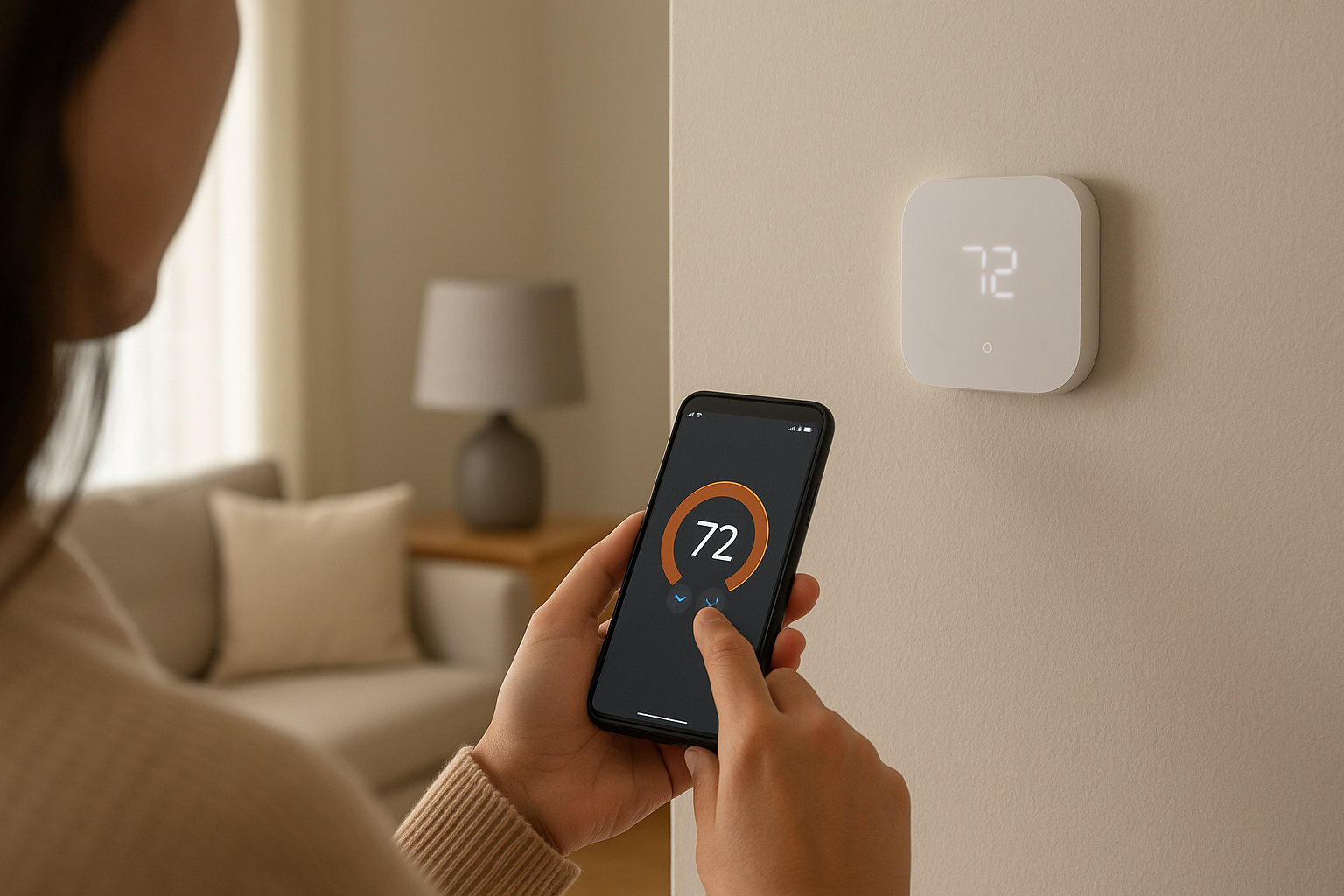
The Amazon Smart Thermostat is the best “budget entry” if you want smart features without paying premium prices. Co-developed with Honeywell technology, it focuses on the basics that matter: Alexa control, schedules, and energy tools that help reduce waste. If your home already runs on Alexa routines, this thermostat fits in naturally and makes temperature control feel like part of the same ecosystem.
⚡ Alexa-first convenience
Change temperatures by voice, trigger away routines automatically, or tie comfort to other devices in your smart home for simple, repeatable automation.
🔒 Stable platform
Supported by Amazon’s ecosystem plus Honeywell-style HVAC know-how, with a focus on broad compatibility and long-term updates.
🌱 Energy conscious
ENERGY STAR® certified, and rebates in many regions can make it one of the lowest-cost smart thermostats after purchase.
- Minimalist square aesthetic
- Quick setup via Alexa app
- Great price-to-features ratio
⚙️ Tech Specs
- Power: 24V hardwired (C-wire)
- Connectivity: Wi-Fi
- App: Alexa
- Model: S6ED3R
7) Best Smart Thermostats 2025 – Wyze Programmable Smart Wi-Fi Thermostat
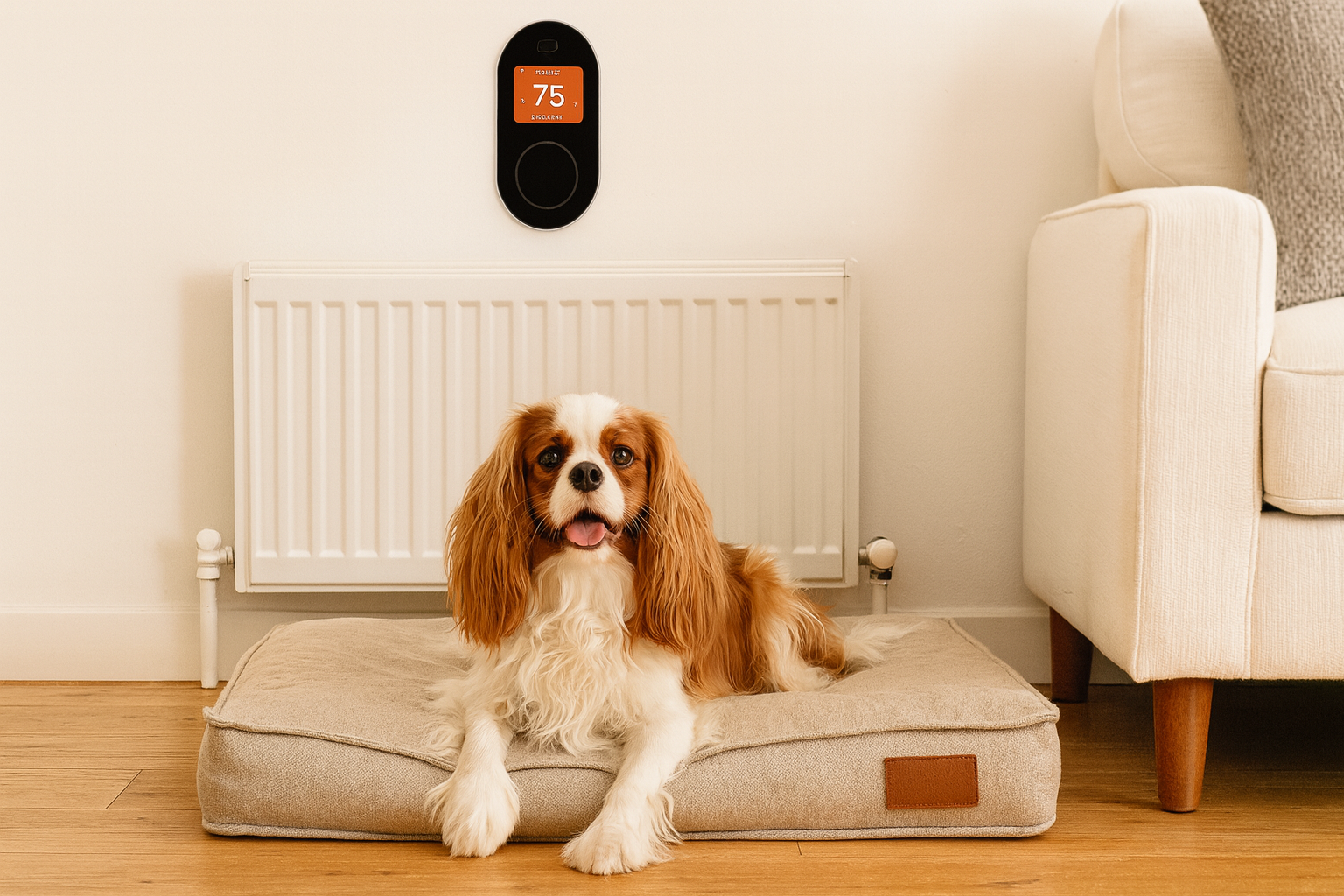
Wyze Thermostat is a strong value pick for apartments, smaller homes, rentals, or anyone who wants smart control without premium pricing. The physical dial is easy to use, while the app handles scheduling, geofencing, and energy guidance. It’s also beginner-friendly: the included accessories and clear documentation make installation less intimidating than many budget competitors.
⚡ Straightforward controls
Dial controls make quick temperature changes simple, and the app covers deeper settings like schedules, away modes, and comfort presets.
🔒 Solid basics
Includes a C-wire adapter for many common wiring situations, which can help avoid power issues and keep Wi-Fi connectivity stable.
🌱 Efficient habits
Presence-based setbacks and weekly schedules reduce unnecessary runtime, helping keep bills more predictable as seasons change.
- Works with Alexa and Google Assistant
- Clear wiring guide with labels included
- Budget price without subscription upsell
⚙️ Tech Specs
- Power: 24V hardwired (C-wire or adapter)
- Connectivity: 2.4 GHz Wi-Fi, Bluetooth
- App: Wyze
- Includes: Wall plate, labels, screwdriver, C-wire adapter
8) Best Smart Thermostats 2025 – Mysa Smart Thermostat for Electric Baseboard Heaters (240V)
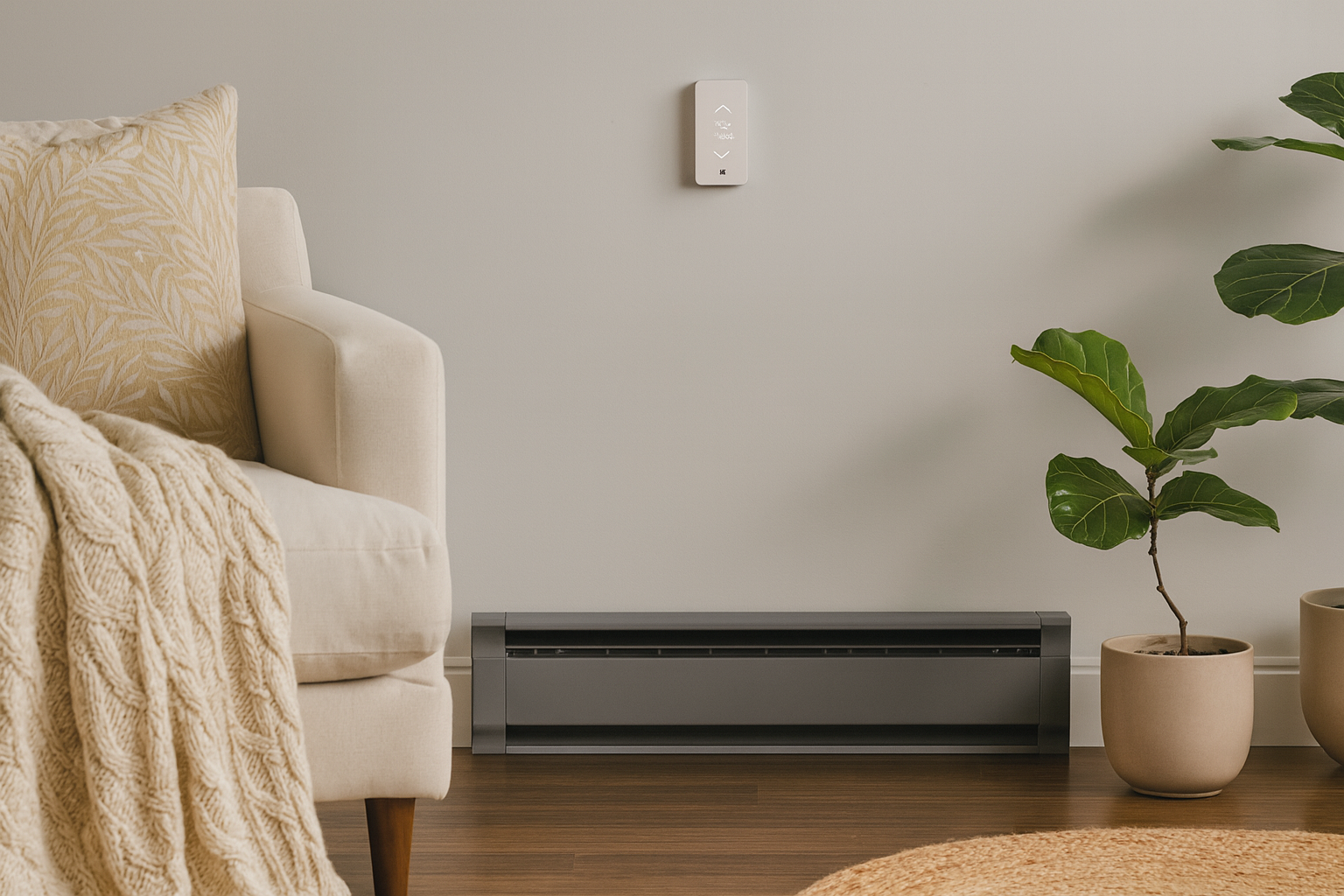
Have 120–240V electric baseboards or in-wall heaters? Standard low-voltage thermostats won’t work — but Mysa is built specifically for line-voltage systems. It adds modern app control, strong scheduling, and smart-home integrations that help electric heat feel far less wasteful. If your home uses electric baseboard heating, this is one of the most practical upgrades you can make for comfort and cost control.
⚡ Built for baseboards
Designed for electric baseboard, convector, and fan-forced heaters, with app scenes and schedules that make electric heat easier to manage every day.
🔒 Clear install & safety
Guided setup with a focus on correct wiring and safer operation. It’s built for high-voltage systems, so compatibility checks matter — and Mysa makes those checks easy to follow.
🌱 Smarter heat, lower bills
Room-level schedules, geofencing, and energy insights help you heat only when and where you need it — a big deal with electric heat costs.
- Works with HomeKit, Alexa, Google
- Modern, minimal design with LED display
- Powerful scheduling and vacation modes
⚙️ Tech Specs
- System: 120–240V electric heat only (not low-voltage)
- Connectivity: Wi-Fi
- App: Mysa
- Install: 4-wire requirement typical; check compatibility first
Final Thoughts
Choosing the best smart thermostats in 2025 comes down to three things: your HVAC type, the rooms you care about most, and the smart-home ecosystem you already use. ecobee Premium is the most complete all-rounder thanks to SmartSensor comfort and extra air-quality insights. Nest Learning 3rd Gen remains the top “autopilot” choice for hands-off scheduling. The 2020 Nest is the streamlined, budget-friendly alternative. Honeywell T9 is ideal for room-by-room comfort in multi-room or multi-story homes. Sensi Touch is a favorite for easy DIY installation and a readable touchscreen. Amazon Smart Thermostat is the best value for Alexa households. Wyze is a strong budget option for smaller spaces. And for high-voltage electric baseboards, Mysa is the right tool for the job.
Any of these eight can help lower energy bills and make comfort feel automatic — just confirm your system compatibility and C-wire requirements before you purchase.
FAQ: Best Smart Thermostats (2025)
Do I need a C-wire?
Many thermostats run best with a C-wire because it provides steady power for Wi-Fi and consistent operation. Some models can work without it (or include an adapter), but a proper C-wire often prevents random restarts, connection drops, and weak performance. Always check your HVAC compatibility before buying.
What’s the difference between Nest Learning (3rd Gen) and the 2020 Nest?
The Learning Thermostat builds schedules automatically based on your habits and focuses on “set it and forget it” automation. The 2020 Nest relies more on app-based scheduling and manual setup, but it delivers core smart features at a lower price. Choose Learning for autopilot behavior, choose 2020 for budget-friendly simplicity.
Which thermostat is best for rooms that run hot or cold?
Pick a model that supports room sensors, such as ecobee Premium with SmartSensor or Honeywell T9 with room sensors. These systems help prioritize specific rooms at specific times, improving comfort without needing a full HVAC zoning retrofit.
Will any of these work with electric baseboard heat?
Most smart thermostats are for low-voltage (24V) HVAC systems. If you have 120–240V electric baseboards or wall heaters, you need a line-voltage thermostat like Mysa. Always confirm voltage type before purchasing.
How much can I actually save?
Results depend on climate, home insulation, and personal habits, but smart schedules, geofencing, and room prioritization can reduce wasted runtime. Many households see meaningful savings over one or two seasons compared with manual control.
Which ecosystem should I choose — Alexa, Google, Siri?
Choose the thermostat that matches what you already use daily. ecobee works well with Alexa, Siri, and Google. Nest is strongest in Google’s ecosystem but also supports Alexa. Honeywell T9 supports Alexa/Google/Apple Home. Sensi supports Alexa/Google. Amazon’s thermostat is most seamless with Alexa. Mysa supports HomeKit, Alexa, and Google.